

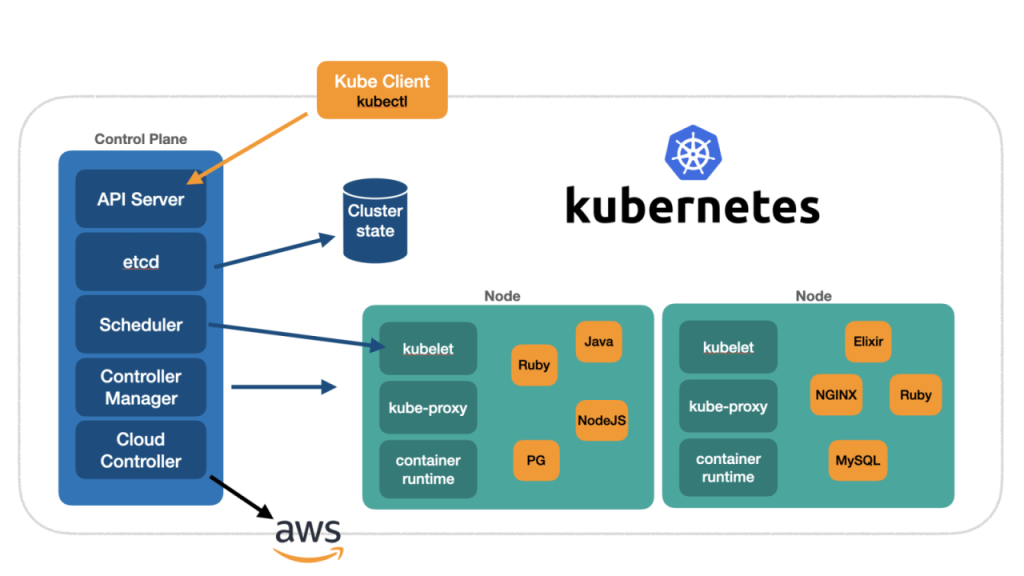
In the rapidly evolving landscape of modern application development, Kubernetes has emerged as a game-changer. This open-source container orchestration platform has revolutionized the way applications are deployed, scaled, and managed. From small startups to large enterprises, organizations are embracing Kubernetes to harness its power and unlock new possibilities in their development workflows.
At its core, Kubernetes provides a robust and scalable infrastructure for containerized applications. It allows developers to package their applications in lightweight, portable containers, ensuring consistency across different environments. With Kubernetes, the days of manual deployment and managing infrastructure intricacies are long gone. The platform automates the deployment, scaling, and load balancing of containers, making application management more efficient and reliable.
One of the key benefits of Kubernetes is its ability to handle complex workloads with ease. With its built-in load balancing and auto-scaling capabilities, Kubernetes ensures that applications can handle increased traffic and demand without compromising performance. This scalability empowers businesses to seamlessly adapt to changing user requirements and spikes in usage, providing a smooth and uninterrupted experience to their customers.
Moreover, Kubernetes promotes a declarative approach to infrastructure management. Developers can define the desired state of their applications using YAML or JSON files, and Kubernetes takes care of the rest. It continuously monitors the application’s state and automatically adjusts the infrastructure to match the desired state. This declarative model simplifies the management of applications and reduces the risk of configuration errors.
Kubernetes also fosters a highly resilient and fault-tolerant environment. It supports self-healing capabilities, where it automatically restarts failed containers and replaces unhealthy ones. This ensures that applications are always available and minimizes downtime, leading to improved reliability and customer satisfaction.
Furthermore, Kubernetes has a thriving ecosystem with a wide range of tools and extensions. It seamlessly integrates with other technologies, such as logging and monitoring systems, service meshes, and container registries, allowing organizations to leverage the best tools for their specific needs. This flexibility and extensibility make Kubernetes a future-proof choice for businesses looking to stay ahead in the ever-evolving world of technology.
In conclusion, Kubernetes has become the de facto standard for container orchestration, offering unprecedented agility, scalability, and automation in application deployment and management. Its ability to handle complex workloads, promote infrastructure-as-code principles, and provide a resilient environment has made it a must-have tool for modern IT development companies. By embracing Kubernetes, businesses can streamline their development processes, increase operational efficiency, and stay competitive in the digital era.